
Capsule Wardrobe: The Complete Guide to Owning Less and Wearing More
Here’s something that doesn’t make sense until you’ve lived it: the fewer clothes you own, the more outfits you have.
It sounds backwards. More clothes should mean more options, right? But anyone who’s stood in front of a packed closet feeling like they have nothing to wear knows that’s not how it actually works. More pieces often means more chaos — things that don’t go together, impulse buys that sit untouched, entire sections of the closet you forget exist.
A capsule wardrobe flips that. Instead of cramming in as much as possible, you build a smaller, more intentional collection where everything works together. Thirty pieces that mix and match into dozens of outfits. A closet where you could grab almost anything and it would pair with almost anything else.
This isn’t minimalism for its own sake. It’s not about owning as little as possible or wearing the same thing every day. A capsule wardrobe is a practical tool — a way to get more use out of fewer things, dress well without the daily struggle, and actually enjoy what you own.
This guide walks through what a capsule wardrobe really is, how to build one that fits your life, and how to make it work season after season.
What Is a Capsule Wardrobe?
A capsule wardrobe is a small, curated collection of clothes that all work together. Every piece coordinates with multiple others, so a limited number of items creates a much larger number of outfit combinations.
The concept has been around since the 1970s — coined by a London boutique owner, later popularized by designer Donna Karan. But the core idea is timeless: own fewer, better things that actually go together.
A typical capsule ranges from 25 to 40 pieces, depending on your lifestyle and how you count (some people include shoes and accessories, others don’t). The exact number matters less than the principle: everything in the capsule earns its place by working with everything else.
What makes it different from just “having a small closet”:
- Intentional coordination. Colors, silhouettes, and styles are chosen to mix and match. Nothing is an orphan.
- Seasonal rotation. Most capsules are built for a specific season, then refreshed when the weather shifts.
- Clear boundaries. You decide how many pieces you need, then stick to it. New additions mean something else leaves.
You’re not wearing the same outfit every day — you’re working with a curated palette that gives you more creative freedom, not less. When everything already goes together, you can play.
Why Capsule Wardrobes Work
The benefits aren’t just theoretical. People who build capsule wardrobes consistently report the same things: easier mornings, less stress, better outfits, and — surprisingly — more satisfaction with what they wear.
Fewer decisions, faster mornings
When everything in your closet goes together, you don’t have to think as hard. You’re not standing there wondering if this top works with those trousers. It does. They all do. Pick two things, add shoes, done.
This is especially valuable on busy mornings or low-energy days — when decision fatigue is highest and your patience is lowest.
You actually wear what you own
In a capsule, there’s nowhere for clothes to hide. No “back of the closet” graveyard. No pieces you forget about for months. You see everything, you reach for everything, and nothing just sits there collecting dust.
Most people find they wear their capsule pieces far more often than they ever wore their larger wardrobes. Each item pulls its weight.
Your style gets clearer
Building a capsule forces you to make choices. What colors do you actually like wearing? What silhouettes feel like you? What fits your real life — not the life you imagine having, but the one you wake up to every day?
The constraints reveal your taste. After a season or two with a capsule, most people have a much sharper sense of their personal style than they did before. If you want to go deeper on that, read about grounding your capsule in your personal style.
You stop impulse buying
When you know exactly what’s in your wardrobe and exactly how many slots you have, shopping changes. You’re not browsing aimlessly. You’re looking for a specific piece that fills a specific gap. And if something doesn’t fit the capsule, it doesn’t come home.
This doesn’t mean you never buy anything new. It means you buy with intention — and you actually use what you buy.
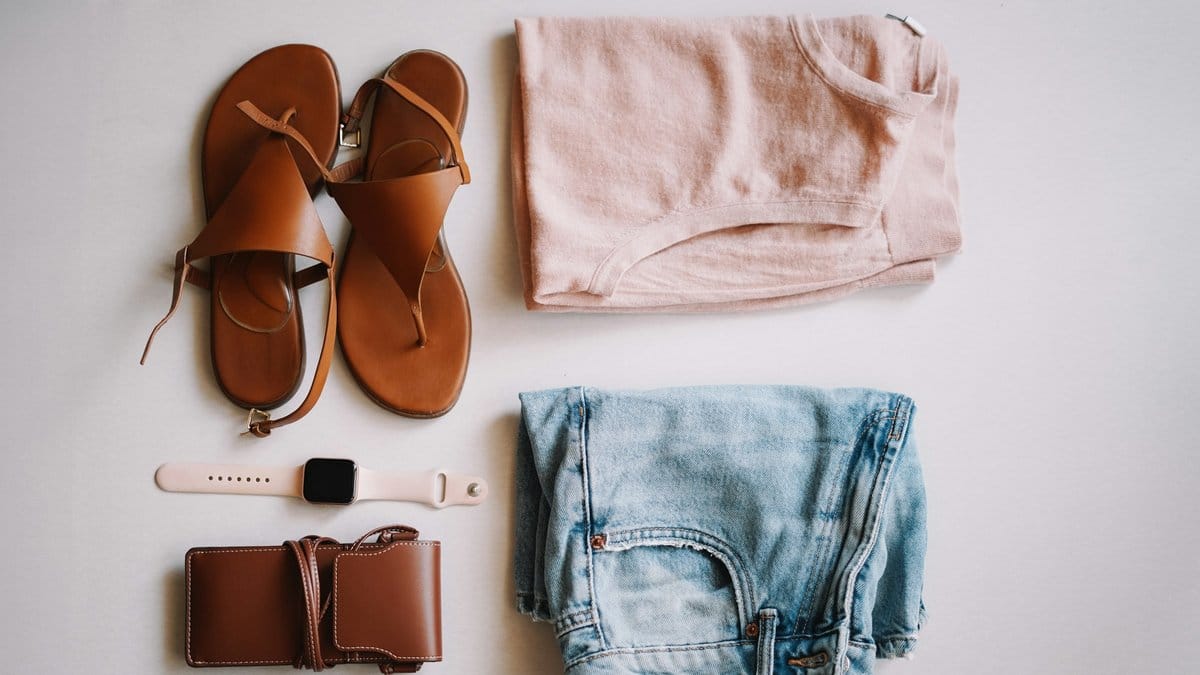
How to Build a Capsule Wardrobe
Building a capsule isn’t complicated, but it does require some honest thinking about how you actually live. If you already have outfit formulas you trust, building around them makes the process even easier. Here’s how to approach it.
Step 1: Define your life categories
Before you pick any clothes, think about what you actually do in a typical week. Your capsule needs to cover your real life, not a fantasy version of it.
Common categories:
- Work (office, remote, client-facing?)
- Casual / weekend
- Active / fitness
- Evenings out
- Weather layers
If you work from home and rarely go to formal events, your capsule will look very different from someone with daily client meetings. Be honest about where you spend your time.
Step 2: Choose a color palette
This is where the magic of mix-and-match comes from. If every piece in your capsule shares a cohesive color palette, almost any combination will work.
A simple approach:
- 2–3 neutrals (black, white, navy, grey, tan, cream) — these are your base
- 1–2 accent colors you love and wear well — these add personality
You don’t need to be rigid about this. The point is coherence, not uniformity. When your colors work together, getting dressed stops being a puzzle.
Step 3: Set your number
Most capsules land between 25 and 40 pieces. A good starting point:
| Category | Suggested count |
|---|---|
| Tops | 8–10 |
| Bottoms | 4–6 |
| Dresses / jumpsuits | 2–3 |
| Outerwear | 2–3 |
| Shoes | 4–5 |
| Accessories | 3–5 |
These numbers aren’t rules — they’re starting points. Adjust based on your life. If you live somewhere with harsh winters, you might need more outerwear. If you wear dresses most days, shift the balance.
The question to keep asking: does this number actually cover my life? If you want more guidance on finding the right count for you, read how many clothes you really need.
A printable Seasonal Capsule Planner can help here — it walks through the categories, counts, and decisions for your specific life.
Step 4: Audit what you already own
You don’t need to start from scratch. Look at what’s already in your closet and pull out the pieces that:
- Fit your color palette
- Fit well and feel good
- Work with multiple other pieces
- You actually reach for
These are your capsule candidates. Everything else stays out — donated, stored, or set aside for now.
Step 5: Identify the gaps
Once you’ve pulled your candidates, lay them out and see what’s missing. Maybe you have plenty of tops but only one pair of trousers that works. Maybe you’re missing a versatile jacket. Maybe every shoe you own is too casual.
Write down the gaps. These become your intentional shopping list — specific pieces with a clear purpose, not random additions.
Step 6: Fill thoughtfully
This is the only part that might involve buying something new. And even then, you’re buying with precision: you know exactly what you need, what color it should be, and what it needs to work with.
If you’re not sure where a piece will fit, don’t buy it. A true capsule piece earns its spot by working with at least three other items.
Capsule Wardrobe by Season
Most capsules are seasonal. You build one for spring/summer, another for fall/winter, and rotate when the weather shifts. This keeps the capsule relevant to your actual life and gives you a natural moment to refresh.
What stays, what rotates
Some pieces are year-round staples: a great pair of jeans, a classic white shirt, a reliable blazer. These might appear in every capsule.
Others are seasonal: the linen trousers for summer, the wool coat for winter, the boots that only come out when it’s cold. These rotate in and out.
A seasonal reset doesn’t mean rebuilding from scratch. It means reviewing what worked, swapping out weather-specific pieces, and adjusting for any changes in your life or taste. For a step-by-step approach, see how to reset your wardrobe every season.
Transition pieces matter
The trickiest moments are the in-between seasons — early fall, late spring — when the weather is unpredictable. This is where layering pieces earn their keep: lightweight jackets, cardigans, scarves that can come on and off.
Build these into your capsule and you’ll handle temperature swings without needing a whole separate wardrobe.

Capsules for Work and Travel
Once you’ve felt how much easier mornings become with a capsule, you’ll want to bring that same feeling to other parts of your life. Two places it helps most: your work wardrobe and your suitcase.
Work capsule
If your job has a dress code — or even just an unspoken standard — a dedicated work capsule makes weekday mornings effortless.
Same idea: limited pieces, cohesive palette, everything works together. But here you’re focused entirely on work, so you can be even more intentional about what makes the cut.
For a detailed walkthrough, see a minimalist capsule built for work.
Travel capsule
Packing is where capsule thinking really shines. A travel capsule is a micro-wardrobe built for a specific trip: enough to cover every occasion, light enough to fit in a carry-on, versatile enough that you’re not wearing the same outfit every day.
The key is the mix-and-match math. Five tops and three bottoms give you fifteen combinations. Add a jacket and a dress, and you’re covered for almost anything — business dinner, beach day, casual sightseeing.
If packing stresses you out, read how to build a travel capsule that fits in a carry-on. And if budget is a concern, you don’t need to start from scratch — here’s how to build a capsule wardrobe on a budget.
Keeping Your Capsule Working
A capsule isn’t a one-time project — it’s a living system. Here’s how to maintain it.
The one-in, one-out rule
Every time something new enters the capsule, something else leaves. This keeps your numbers honest and prevents the slow creep back toward closet chaos.
It also makes you think twice before buying. If you have to let go of something to make room, is the new piece really worth it?
Seasonal reviews
At the start of each season, spend 30 minutes with your capsule:
- What worked well last season?
- What did you barely wear?
- What’s missing for the season ahead?
This is your chance to refine. Move out the pieces that aren’t pulling their weight. Note the gaps you want to fill. Keep the capsule evolving with your life.
If you want help thinking through seasonal planning, we put together a printable Seasonal Capsule Planner — it walks you through the categories, counts, and rotation decisions for each season. Grab it here.
When your life changes
A capsule that worked when you had a corporate job might not work when you go freelance. A capsule built for city life might need adjustment when you move somewhere with actual weather.
That’s fine. The capsule adapts. When your life shifts, revisit the categories, reassess what you actually need, and rebuild accordingly. The skill transfers — once you’ve built one capsule, you can build another.
What Comes Next
Once your capsule is working, the next step is making it even easier to use. That’s where we come in.
We built Magnolia to turn your capsule into something you can see, plan with, and actually use — not just a tidy closet, but a visual tool that shows you every combination, helps you plan outfits for the week, and makes sure nothing gets forgotten. A capsule is powerful. A capsule you can browse on your phone is even more so.
Frequently Asked Questions
Won’t I get bored wearing the same things?
Most people find the opposite. When everything works together, you have more combinations to explore — not fewer. You discover pairings you wouldn’t have tried when you had too many options competing for attention. And because you’re wearing each piece more often, they become real favorites — not just things hanging in the closet.
How many items should be in a capsule wardrobe?
There’s no magic number. Most capsules range from 25 to 40 pieces, depending on your lifestyle, climate, and how you count. Start with a number that feels realistic for your life, then adjust after you’ve lived with it for a season.
What about special occasions?
A capsule covers your everyday life — it doesn’t have to cover weddings or black-tie events. Keep a few special pieces outside the capsule and pull them out when you need them. The capsule handles the 90%. The outliers take care of themselves.
What if I love color and pattern?
Capsules don’t have to be neutral. You can build a colorful, pattern-rich capsule — you just need to be thoughtful about which colors and patterns play well together. A cohesive palette can absolutely include bold choices.
How long does it take to build one?
The initial build takes a few hours — going through your closet, pulling candidates, noting gaps. But you don’t need to do it all at once. Start with what you have, wear it for a few weeks, notice what’s missing, and fill the gaps slowly. A capsule gets better over time as you learn what actually works for your life.
Image credits: Ala Azizli, Karolina Grabowska via Unsplash