
Personal Style Discovery: How to Define the Way You Want to Dress
Ask someone what kind of music they like and they’ll tell you. They’ll name artists, describe the feeling, explain what draws them in. Same with movies, books, interiors — people know their taste and can talk about it.
But ask that same person to describe their personal style and something strange happens. They hesitate. They say “I don’t know, I just wear what I like.” Or they name a vague category — casual, classic, minimalist — that doesn’t really capture anything.
It’s odd when you think about it. You’ve been getting dressed every day of your life. You have opinions. You know when something feels right and when it doesn’t. But somehow, most people never find the words for their own style. It stays a feeling — useful enough to recognize, too vague to build on.
That’s what this guide is for. Personal style isn’t mysterious, and it isn’t something only certain people have. It’s just taste — your taste — applied to clothing. And like any taste, it becomes clearer and more useful once you can actually articulate it.
We’ll walk through how to notice the patterns you already have, how to put language to what draws you in, and how to turn a vague sense of “I like this” into something you can use every time you get dressed or walk into a store.
What Is Personal Style?
Personal style is the consistent thread that runs through the clothes you feel best in. It’s not one outfit — it’s the underlying taste that connects your favorite pieces, your go-to combinations, and the looks that make you feel most like you.
Some people describe it as an aesthetic. Others call it a vibe. Whatever word you use, the idea is the same: it’s your visual identity, expressed through what you wear.
Personal style is different from fashion. Fashion is external — trends, runways, what’s “in” this season. Style is internal — what resonates with you, regardless of what anyone else is wearing.
It’s also different from dressing well. You can be technically well-dressed and still feel like you’re wearing a costume. Personal style is what makes an outfit feel like it belongs to you.
Why It Matters
Knowing your personal style doesn’t mean you’ll never have a bad outfit day. But it does change your relationship with your closet — and with yourself.
Getting dressed becomes easier
When you know what you’re going for, you’re not starting from scratch every morning. You have a direction. You know which shapes, colors, and combinations feel right. The daily question shifts from “what should I wear?” to “which version of my style fits today?”
Your wardrobe starts to make sense
Ever looked at your closet and wondered why you bought half of it? Usually it’s because you were shopping without a point of view — grabbing things that looked nice in the moment without knowing if they fit who you are.
Once you define your style, your wardrobe becomes more coherent. You stop buying things that don’t fit the picture. What’s left is clothes you actually want to wear.
You stop comparing yourself to others
Someone else’s style might be beautiful, but it’s not yours. When you know your own aesthetic, you can admire what others wear without feeling like you should be wearing it too.
This is surprisingly freeing. You’re no longer trying to be a version of someone else. You’re just being a clearer version of yourself.
How to Discover Your Personal Style
Style discovery isn’t about taking a quiz and getting a label. It’s about paying attention — to what you’re drawn to, what you reach for, and what makes you feel good when you wear it.
Here’s a process that actually works.
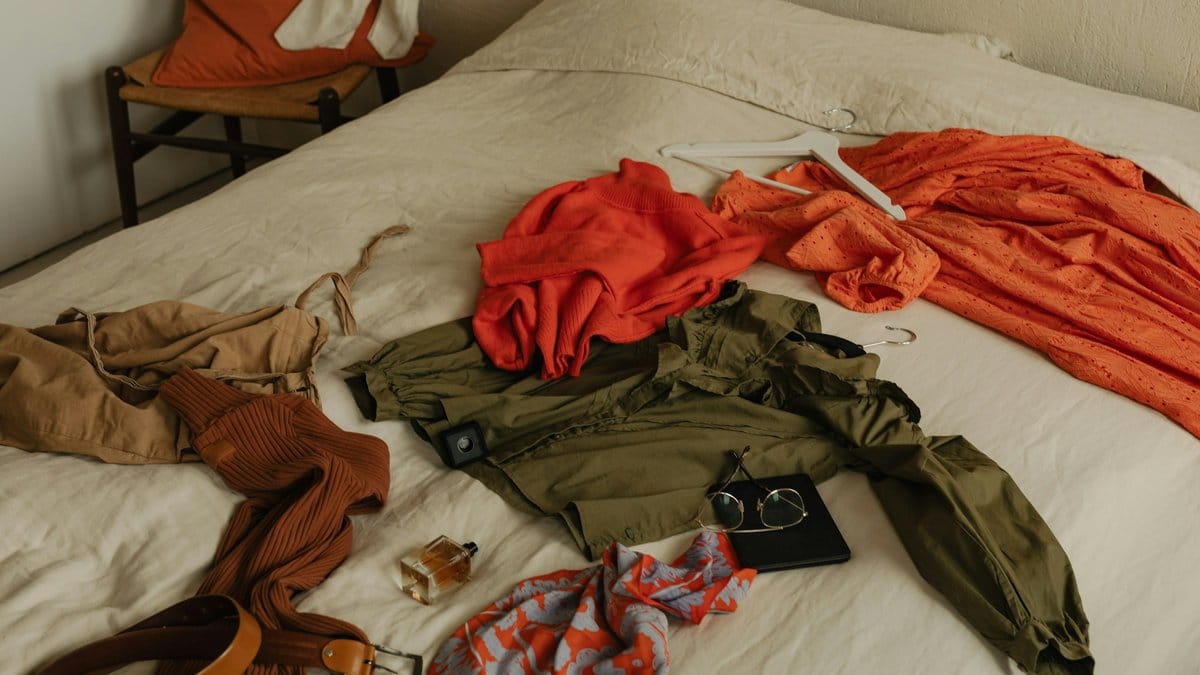
Step 1: Look at what you already love
Start with your own closet. Pull out the pieces you wear most often — the ones you reach for without thinking, the ones that always feel right.
Lay them out and look for patterns:
- What colors keep showing up?
- What silhouettes do you gravitate toward?
- Are they structured or relaxed? Minimal or detailed?
- What fabrics feel best on your body?
You already have taste. It’s showing up in what you choose. The goal is to name it.
Step 2: Notice what catches your eye
Pay attention when you’re scrolling, flipping through a magazine, or walking past a window display. What makes you stop?
Save the images that resonate — not the ones you think you should like, but the ones that genuinely pull you in. Over time, a pattern will emerge.
This isn’t about copying specific outfits. It’s about gathering clues. If you keep saving images with clean lines and neutral colors, that’s telling you something. If you keep stopping for bold prints and unexpected combinations, that’s a clue too.
Step 3: Describe it in words
Try putting your style into words — even loosely. This helps you hold onto it.
Some questions to get started:
- If your style were a place, where would it be?
- If it were a time of day, when?
- Three adjectives that describe how you want to feel when you’re dressed
You’re not writing a manifesto. You’re finding language that captures the feeling you’re going for. “Relaxed but intentional.” “Soft and warm with a bit of structure.” “Like I live somewhere beautiful and have my life together.”
The words don’t have to be precise. They just have to spark something when you read them back.
The free Style Identity Workbook gives you space to work through these and capture what you find.
Step 4: Identify what doesn’t fit
Style is as much about what you’re not as what you are. Look at the clothes in your closet that you never reach for — the ones that seemed like a good idea but don’t feel like you.
What do they have in common? Maybe you keep buying trendy pieces that look great on the hanger but don’t match how you want to feel. Maybe you have a drawer full of bold colors you never actually wear.
Letting go of what doesn’t fit is part of finding what does. For more on this, read about defining your personal aesthetic.
Step 5: Experiment with intention
Style discovery isn’t just thinking — it’s trying. Wear something slightly outside your comfort zone and see how it feels. Pair things you wouldn’t normally pair. Pay attention to what gives you a little thrill and what makes you want to change before leaving the house.
Not every experiment will work. That’s the point. You’re gathering information about yourself.
Building Blocks of Personal Style
Once you’ve started noticing your patterns, you can get more specific about the elements that make up your style.
Color
Color is often the most visible part of your style. Some people are drawn to neutrals. Others feel most alive in saturated color. Some love contrast, others prefer tone-on-tone.
Think about:
- What colors do you wear most often?
- What colors do you get compliments in?
- What colors make you feel confident vs. washed out?
If you want to go deeper, learning how to find your color season can help you understand which shades work best with your natural coloring. And once you know your palette, dressing in a cohesive color palette becomes much easier.
Silhouette
Silhouette is the shape your clothes make on your body — fitted or loose, structured or flowing, high-waisted or low.
You might not think about this consciously, but you have preferences. Some people feel best in tailored, close-to-the-body pieces. Others love volume — oversized sweaters, wide-leg trousers, billowy dresses.
Neither is better. What matters is what makes you feel like yourself.
Details
The small things often carry the most personality: a particular neckline you always reach for, a preference for natural fabrics, a love of interesting buttons or subtle texture.
Pay attention to the details in the clothes you love. They add up to something.
Vibe
This is the hardest to pin down, but maybe the most important. What mood does your style express?
Think less in single words and more in textures and scenes. There’s a difference between “minimalist” and “Japanese minimalism with warmth” — the second gives you something to work with. There’s a difference between “classic” and “1990s Carolyn Bessette — clean, unfussy, confident.” One is a category. The other is a feeling you can actually dress toward.
Your vibe might be architectural and precise. It might be layered and bohemian. It might be quiet luxury with a bit of wit. The goal isn’t to fit a label — it’s to find the specific blend that feels like home when you put it on.
From Discovery to Daily Life
Knowing your style is one thing. Living it is another. Here’s how to make your discoveries practical.
Edit your wardrobe
Once you’ve defined your style, look at your closet with fresh eyes. Does everything there fit the picture? If not, it might be time for a cleanout — not to own less, but to own things that are actually you.
Shop with intention
When you know your style, shopping changes. You’re not wandering hoping something catches your eye. You’re looking for specific things that fit a clear vision. The question becomes: does this belong in my style, or am I just attracted to it in the moment?
Build a signature
Some people take personal style a step further and develop a signature look — a recognizable thread that runs through almost everything they wear. It might be a color, a silhouette, a particular combination you keep returning to.
You don’t have to have a signature. But if the idea appeals to you, read about building a signature outfit style.
Let it evolve
Your style isn’t fixed. It will shift as your life changes — new job, new city, new phase. That’s healthy. The goal isn’t to lock yourself into one look forever. It’s to stay connected to what feels like you, even as that changes.
Style and Systems
Style discovery is deeply personal — but it doesn’t have to stay abstract. Once you know your aesthetic, you can turn it into something usable.
That’s where outfit formulas come in. Instead of reinventing your look every morning, you build repeatable combinations that express your style and work every time. You can express your style through outfit formulas that feel like you — not generic templates, but patterns built from your own taste.
If you want help turning your discoveries into something concrete, we put together a short workbook that walks you through defining your colors, your silhouettes, and your vibe — with space to capture what you find. Grab the free Style Identity Workbook here.
What Comes Next
Defining your style is the foundation. What you do with it is up to you — a curated closet, a capsule wardrobe, a set of go-to formulas that make mornings easy.
We built Magnolia to help with that part. Magui, our AI stylist, learns your taste from what you wear and what you love — and uses that to suggest outfits built from your actual wardrobe, in your actual style. Your taste, reflected back.
Frequently Asked Questions
What if I don’t have a personal style?
You do — you just might not have named it yet. Everyone has preferences, even if they’re unconscious. Start by looking at what you already reach for. The patterns are there.
Can my style change over time?
Absolutely. Style evolves as you do. What felt right at 25 might not fit at 35 — and that’s fine. The process of discovery isn’t one-and-done. It’s something you return to as your life shifts.
What if I like too many different styles?
That’s common, especially early in the process. You’re allowed to be drawn to multiple aesthetics. Over time, you’ll notice which ones you actually wear vs. which ones you just admire from a distance. That’s the filter.
How long does it take to find your style?
There’s no timeline. Some people have a breakthrough in a weekend. Others refine their style over years. The important thing is paying attention — the clarity builds with time.
Do I need to follow trends at all?
No. Trends are optional. If one happens to align with your style, great. If not, ignore it. Personal style is about what works for you, not what’s currently popular.
Image credits: Karolina Grabowska via Unsplash