
How to Build Repeatable Outfits That Still Feel Fresh
You know that feeling when you’re running late and nothing in your closet looks right? You try something, it’s wrong. You try something else, worse. You end up leaving the house in an outfit you don’t love because you ran out of time to find something better.
And now your life sucks.
The best mornings are the ones where you already know what you’re wearing — where you open your closet, grab the outfit you planned, and move on with your day. No scrambling, no second-guessing, no settling. Just dressed and out the door.
This guide is about building that: a set of go-to outfits you’ve thought through ahead of time, so getting dressed stops being a problem you solve every morning and becomes something you barely think about. The key is making them feel like real options you’re excited to wear.
The Goal: Rotation, Not Repetition
There’s a difference between repeating the same outfit and rotating through outfits you’ve built intentionally.
Repetition is wearing your navy sweater and grey trousers because you can’t think of anything else. You default to it, feel vaguely bored, and wonder why your closet feels so limited.
Rotation is wearing your navy sweater and grey trousers on Tuesday because you planned it, knowing you’ll wear your cream knit and black trousers on Thursday and your denim jacket look on Saturday. Each outfit is part of a set. You chose them all; you’re just cycling through.
The outfits might even look similar to an outside observer. But they feel completely different to wear because one is a default and the other is a decision.
Step 1: Start With What Already Works
You don’t need to invent new outfits. Start by identifying the ones you already reach for.
Think about the last few weeks. Which outfits made you feel good? Which ones were easy to put together and comfortable all day? Those are your starting points — proven combinations you can build on.
If you can’t think of specific outfits, try this: look at the pieces that are always in your laundry pile. They’re there because you actually wear them. What do you pair them with? That’s probably a formula you trust, even if you’ve never named it.
Write down three to five outfits that consistently work for you. Be specific:
- Grey crewneck sweater + black trousers + white sneakers
- Navy blazer + white t-shirt + dark jeans + loafers
- Striped button-down + chinos + brown belt + desert boots
These are the foundation of your rotation.
Step 2: Map Your Week
Now think about your actual life. What does a typical week look like?
For her: Maybe three office days, two work-from-home days, one evening out, one casual weekend day.
For him: Maybe four client-facing days, one casual Friday, a Saturday for errands, a Sunday for something relaxed.
Your rotation should match this rhythm. You don’t need the same number of outfits as days — you need enough variety to cover the types of days you have.
Three work outfits that rotate across five office days feels natural. Two weekend outfits that alternate every Saturday and Sunday works fine. The goal is coverage, not novelty.
Step 3: Build Variations
Here’s where repeatable outfits start feeling fresh instead of stale: variations on a theme.
Take one of your proven combinations and change one element. Not the whole outfit — just one piece.
Base: White t-shirt + dark jeans + navy blazer + white sneakers
Variation 1: Push up the blazer sleeves, half-tuck the tee, swap the sneakers for tan suede loafers. Same pieces, but now it reads intentional rather than thrown together.
Variation 2: Lose the blazer, add a grey crewneck sweater over the tee so just the collar shows. The texture shift from cotton to knit changes the whole feel — softer, more approachable.
Variation 3: Keep the blazer but swap the white tee for a fitted black turtleneck and the sneakers for dark leather boots. Now it’s evening-ready without trying too hard.
The pieces overlap, but each combination lands differently. You’re not just swapping colors — you’re shifting texture, proportion, and what the outfit communicates.
Do this for each of your base outfits. You’ll quickly go from five combinations to fifteen — all built from the same core wardrobe.
Step 4: Assign Outfits to Days
This is the step most people skip, and it’s the one that makes the biggest difference.
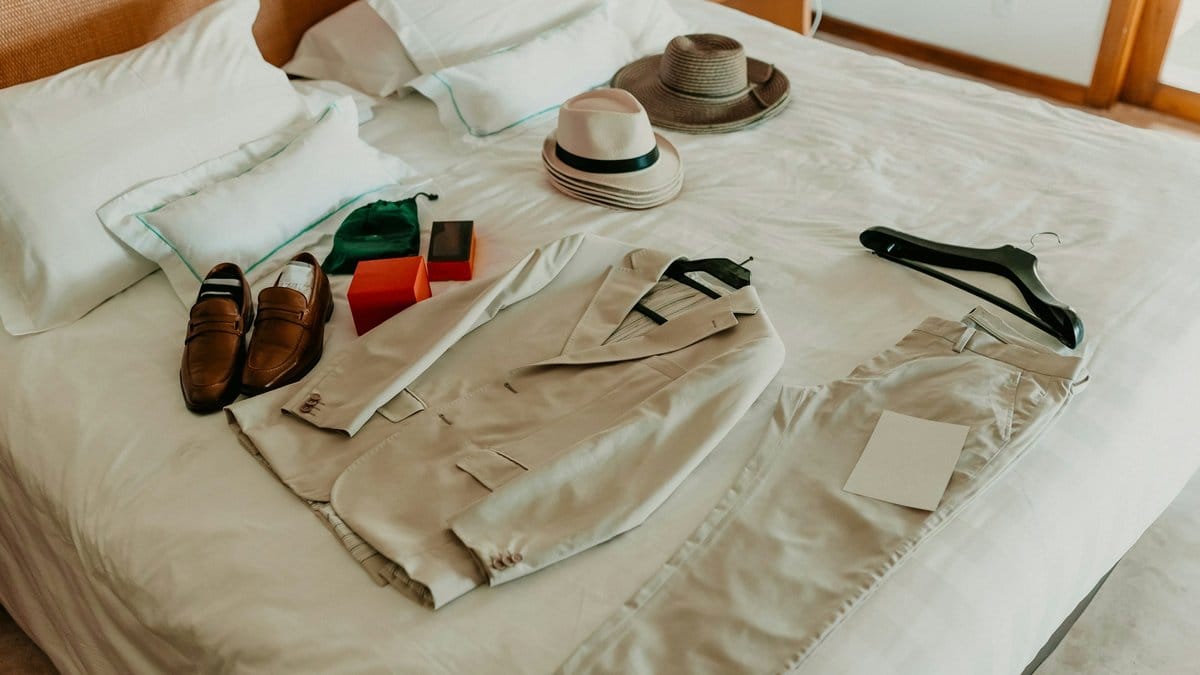
Once you have your rotation built, assign specific outfits to specific types of days. Not rigidly — you’re not wearing the same thing every Monday forever. But roughly: this outfit is for important meetings, this one is for low-key office days, this one is for weekends.
When you wake up on Wednesday and check your calendar, you shouldn’t be asking “what do I wear?” You should be asking “is this a meeting day or a normal day?” — and the outfit follows automatically.
Some people plan their whole week on Sunday evening. Others just know their defaults and adjust. Either approach works. What matters is that getting dressed becomes a two-step process: (1) what kind of day is it, (2) which outfit fits that.
Step 5: Keep It Visible
A rotation only works if you can remember it. And at 7am, you won’t.
Write your go-to outfits somewhere you’ll see them. A note inside your closet door. A list on your phone. A saved album of outfit photos. Whatever works for you.
The format doesn’t matter. What matters is that when you’re standing in front of your closet half-awake, you’re not inventing — you’re selecting from options you’ve already thought through.
How to Keep Rotation From Feeling Stale
Even good outfits can start to feel tired if you wear them the same way forever. Here’s how to keep things interesting without constantly buying new clothes.
Swap the accessories
The fastest way to refresh an outfit is to change what goes around it. A different watch, a new belt, a scarf you forgot you owned. The core stays the same; the edges shift.
For her: Different earrings, a structured bag instead of a crossbody, a silk scarf as a hair tie.
For him: Switching from a leather belt to a woven one, adding a watch you haven’t worn in months, trying a different shoe color.
Change the shoes
Shoes have outsized impact on how an outfit reads. The same jeans-and-blazer combination looks completely different with white sneakers versus loafers versus boots. Rotating shoes is an easy way to make the same clothes feel new.
Adjust proportions
Roll your sleeves differently. Tuck your shirt when you usually don’t (or don’t when you usually do). Cuff your trousers. Small changes in how you wear the same pieces can shift the whole silhouette.
Introduce one new piece seasonally
You don’t need a wardrobe overhaul. But adding one intentional piece per season — a new knit, a different jacket, a pair of trousers in a color you don’t have — gives you fresh material to rotate into your existing combinations.
How Many Outfits Do You Actually Need?
Fewer than you think.
For most people, a rotation of 8–12 outfits covers everything: work, weekends, evenings, and the occasional curveball. That’s not 12 unique pieces — it’s 12 combinations built from a smaller set of clothes.
If your wardrobe is already full, you probably have the pieces. The work is identifying which combinations actually work and committing to them.
If you want a framework for outfit formulas to build from, see outfit formulas that make repetition work. The pillar breaks down five structures you can adapt to your own clothes.
What About Special Occasions?
Your rotation handles the regular week. For the occasional wedding, interview, or fancy dinner — you don’t need a formula. You need one or two outfits you’ve thought through in advance.
Keep these separate in your closet and your head. They’re not part of your daily rotation; they’re reserved for the moments that call for them. When those moments come, you’ll know exactly what to wear because you already decided.
Making It Automatic (When You Want It to Be)
A rotation isn’t about turning getting dressed into a chore you rush through. If you love putting outfits together, keep doing that — a rotation just gives you a fallback for the mornings when you don’t have the time or energy.
The goal is options: on days when you want to experiment, you can. On days when you’re tired or rushed, you have proven combinations waiting. You’re not stuck either way.
After a few weeks of building and refining your rotation, the stressful mornings start to disappear. You’ve done the thinking ahead of time, and now you get to enjoy the results.
If your life is shifting — new job, new city, new phase — here’s how to adapt your wardrobe when life shifts. Your rotation should evolve with you, not stay frozen in the last version of your life.
If you’re wondering which pieces are worth investing in for your rotation, read about the pieces that make repeatable outfits work. A few high-leverage items make the whole system click.
Using a Tool to Save Your Rotation
If you want to take this further, a wardrobe app lets you photograph your outfits and save them as combinations. Instead of remembering your rotation, you scroll through it. Instead of planning mentally, you assign outfits to calendar days.
With Magnolia, you can build your rotation once and pin outfits to specific days in the visual planner. Monday’s look is already decided before you wake up. You’re not thinking about what to wear; you’re just putting it on.
Frequently Asked Questions
How do I know if an outfit belongs in my rotation?
If you’ve worn it at least three times and felt good each time, it qualifies. If you’ve worn it once and can’t remember how it felt, it’s not proven yet.
What if I get bored with my rotation?
That’s normal — and it’s why variations matter. Before adding new clothes, try swapping shoes, changing accessories, or adjusting how you wear the same pieces. If you’re still bored after that, one new piece might be enough to refresh everything.
Should I include outfits I don’t love but “need”?
Only if they genuinely work. If there’s a combination you keep forcing because you think you should wear it — the blazer that never feels right, the trousers that look good but aren’t comfortable — leave it out. Your rotation should be outfits you actually want to put on.
Can I build a rotation with a small wardrobe?
Yes — and it’s often easier. Fewer pieces means fewer combinations to sort through. If you’re working with a capsule, the rotation practically builds itself. See how to build a capsule wardrobe for more on this approach.
How often should I update my rotation?
Seasonally is a natural rhythm. When the weather shifts, some combinations stop working and others become possible. That’s a good time to reassess what’s in your rotation and what needs to change.