
Minimalist Capsule for Work: A Professional Wardrobe That Thinks for You
Getting dressed for work shouldn’t require much thinking. You have actual work to think about.
And yet, there you are, 7:15am, staring at the closet, running through options. Does this top work with those trousers? Is this too casual for the meeting? Is that blouse even clean? By the time you’ve figured it out, you’ve lost ten minutes and a little bit of your morning calm.
A minimalist work capsule changes this. Fewer pieces, all of them good, all of them coordinated. You open your closet, grab almost anything, and it works. For Monday’s team meeting, Wednesday’s client presentation, Friday’s casual lunch. The wardrobe does the thinking so you don’t have to.
A minimalist capsule for work is a small, intentional collection of professional clothing — typically 15–20 pieces — where every item coordinates with every other, making morning outfit decisions nearly effortless.
So How Many Pieces, Actually?
Fewer than you’d expect. A functional work capsule can run on 15–20 pieces:
- 4–5 tops (blouses, shells, structured knits)
- 3–4 bottoms (trousers, skirts)
- 2 blazers or jackets
- 2 dresses (optional but efficient — one piece, complete outfit)
- 3–4 shoes (one comfortable flat, one heel or elevated option, one for bad weather)
That’s it. If everything coordinates, these pieces create dozens of distinct outfits, enough to go weeks without obvious repetition.
When every piece works with every other piece, getting dressed becomes a two-minute task. That’s the real payoff.
Building Your Work Capsule
Start with your actual job
Not all work wardrobes are the same. Before picking pieces, think about what your job actually requires:
- How formal is your office day-to-day?
- Do you have client-facing moments that need extra polish?
- Is there a casual Friday (or casual every day)?
- Do you travel for work?
A corporate lawyer’s capsule looks different from a creative director’s. Build for your reality, not a generic idea of “professional”.
Choose a tight color palette
This is what makes mix-and-match actually work. Pick:
- One or two neutrals for bottoms and blazers (black, navy, grey, tan)
- One or two colors for tops that work with those neutrals
- One accent if you want some personality
When your palette is tight, any top works with any bottom. No mental math required in the morning.
Prioritize versatility over variety
Each piece should work in at least three outfits. If you’re considering a top that only goes with one skirt, it’s not earning its spot.
The most versatile pieces tend to be simple: clean lines, solid colors or subtle patterns, classic shapes that don’t scream a specific trend. Interesting details are fine, just make sure they don’t limit what the piece pairs with.
Get the fit right
In a small capsule, every piece is visible often. Fit matters more than it would in a larger wardrobe where things can hide.
This doesn’t mean everything needs tailoring, but it does mean being honest about what fits well and what you’re tolerating. A work capsule with three perfect-fitting tops beats one with six that are almost right.
A Sample Work Capsule
Here’s what a 17-piece work capsule might look like:
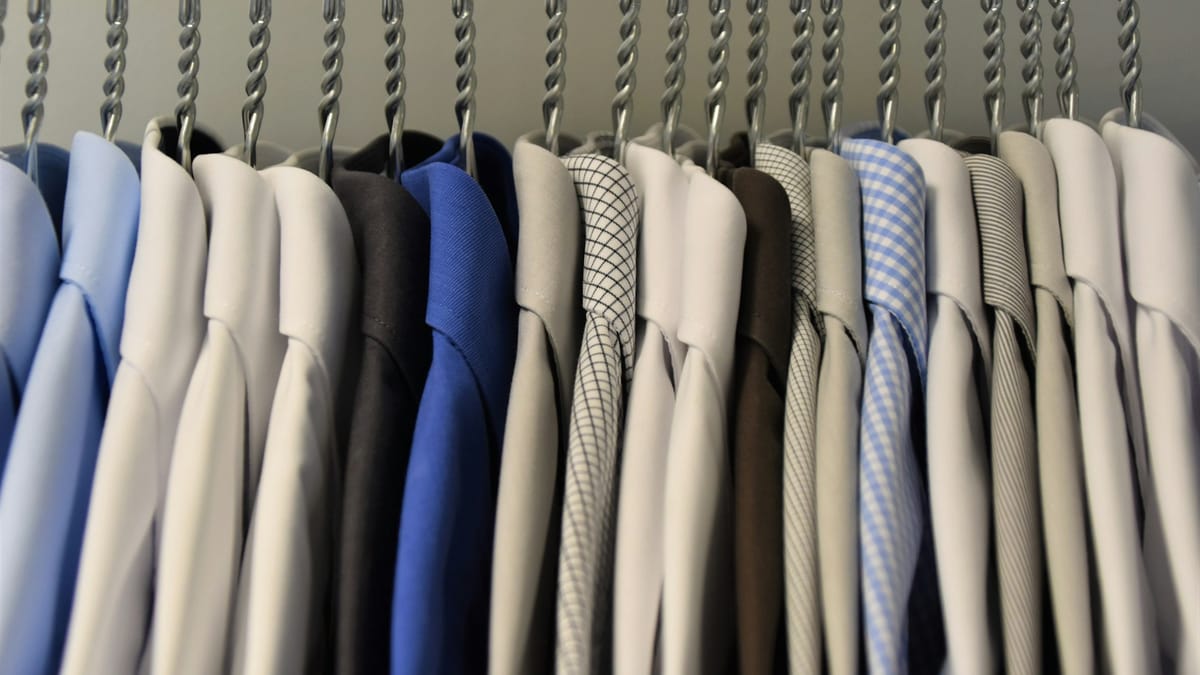
Tops (5):
- White silk blouse
- Navy knit shell
- Light grey fitted sweater
- Black and white striped top
- Cream blouse with subtle detail
Bottoms (4):
- Black tailored trousers
- Navy trousers
- Grey pencil skirt
- Black wide-leg trousers (for variety in silhouette)
Blazers (2):
- Navy blazer
- Black blazer
Dresses (2):
- Navy sheath dress
- Black wrap dress
Shoes (4):
- Black pointed flats
- Nude heels
- Black ankle boots (for colder months or rainy days)
- Comfortable loafers (for casual days)
Every top works with every bottom. Both blazers work over everything. The dresses stand alone or layer under blazers. That’s over 40 outfit combinations from 17 pieces.
Making It Work Day to Day
Plan your week loosely
Sunday evening, glance at your calendar. Big meeting on Tuesday? Note that you’ll want the blazer. Casual Friday? The loafers and a softer top. You’re not planning every detail — just flagging the days that need specific levels of polish.
Rotate intentionally
With a small capsule, you’ll wear things more often. That’s fine, no one is tracking your outfits as closely as you think. But varying your combinations keeps things feeling fresh. Different top with the same trousers. Same blazer with a different dress.
For specific combinations that work well together, five outfit formulas built for the office gives you structures you can apply to your capsule pieces.
Keep it maintained
Fewer pieces means each one gets more wear, which means more attention to care. Stay on top of dry cleaning, deal with loose buttons before they become emergencies, and replace pieces when they start looking tired.
A capsule that looks sharp requires less effort overall, but the effort you do put in matters more per piece.
When Work Includes Travel
If your job involves travel, your work capsule becomes your packing list. The same pieces that get you through office weeks can cover business trips, you just need to think about wrinkle-resistant fabrics and layers for unpredictable temperatures.
For a deeper look at packing, a travel capsule for business trips covers how to adapt the capsule approach for life on the road.
Evolving Your Capsule
A work capsule isn’t static. Your job might change. Your office dress code might shift. Your body might change. Review the capsule every season:
- What got worn constantly?
- What sat untouched?
- What’s showing signs of wear?
- Has anything in your work life changed that affects what you need?
Swap pieces out as needed. Add something if there’s a genuine gap. Remove what isn’t working. The capsule stays current because you keep it that way.
For a structured approach to seasonal reviews, the complete capsule wardrobe guide covers how to maintain and evolve your wardrobe over time.
Using a Tool to Manage It
Once you have your capsule, seeing all the combinations at once helps. Magnolia makes this easier. You photograph your pieces, and Magui helps you see which tops work with which bottoms, save outfits that work, and plan your week without standing in front of your closet every morning.
For a work capsule especially, being able to assign outfits to calendar days means you’re not making decisions when you should be focused on the day ahead. The wardrobe is handled; your brain is free for what matters.
Frequently Asked Questions
Won’t people notice I’m wearing the same things?
Less than you think. Most people are focused on their own lives. And a small capsule of high-quality, well-fitting pieces reads as polished, not repetitive. You’ll look more put-together than someone with a closet full of mediocre options.
What about seasonal changes?
A work capsule can shift slightly by season, lighter fabrics in summer, warmer layers in winter. The core stays similar, but you might swap a silk blouse for a knit top, or add a wool blazer when it’s cold. Seasonal resets keep the capsule current.
How long does it take to build a work capsule?
You probably already own many of the pieces. The first pass is auditing what you have and identifying gaps. Filling those gaps can happen gradually, you don’t need to buy everything at once.
What if my office is very casual?
A casual office capsule still works the same way, fewer pieces, all coordinating, easy combinations. The pieces themselves are just more relaxed: knits instead of blazers, clean sneakers instead of heels, soft trousers instead of tailored ones.
Free resource: Seasonal Capsule Planner A printable planner for building your work capsule — category breakdowns, piece counts, and space to plan your color palette.
Image credits: Waldemar Brandt via Unsplash